WWDC26 Preview: Siri, AI, and Foldable Hints Are What I’m Watching
A WWDC26 preview covering Apple’s official schedule and the Siri, AI, Foldable, and Xcode stories worth watching before the keynote.
Contents
WWDC season always brings the same loop.
I check the keynote date, read a few reports, then end up asking the same thing:
"So what is actually changing this year?"
The developer checklist matters too. Xcode, SDKs, App Store changes, device support, all of that can affect real work. But before the keynote, the fun part is still the feature side: Siri, Apple Intelligence, Xcode, and maybe some foldable iPhone hints.
For WWDC26, the first thing I want to see is Siri. Then AI naturally follows. And then, of course, Foldable. I mean, a folding iPhone? That is hard not to click.
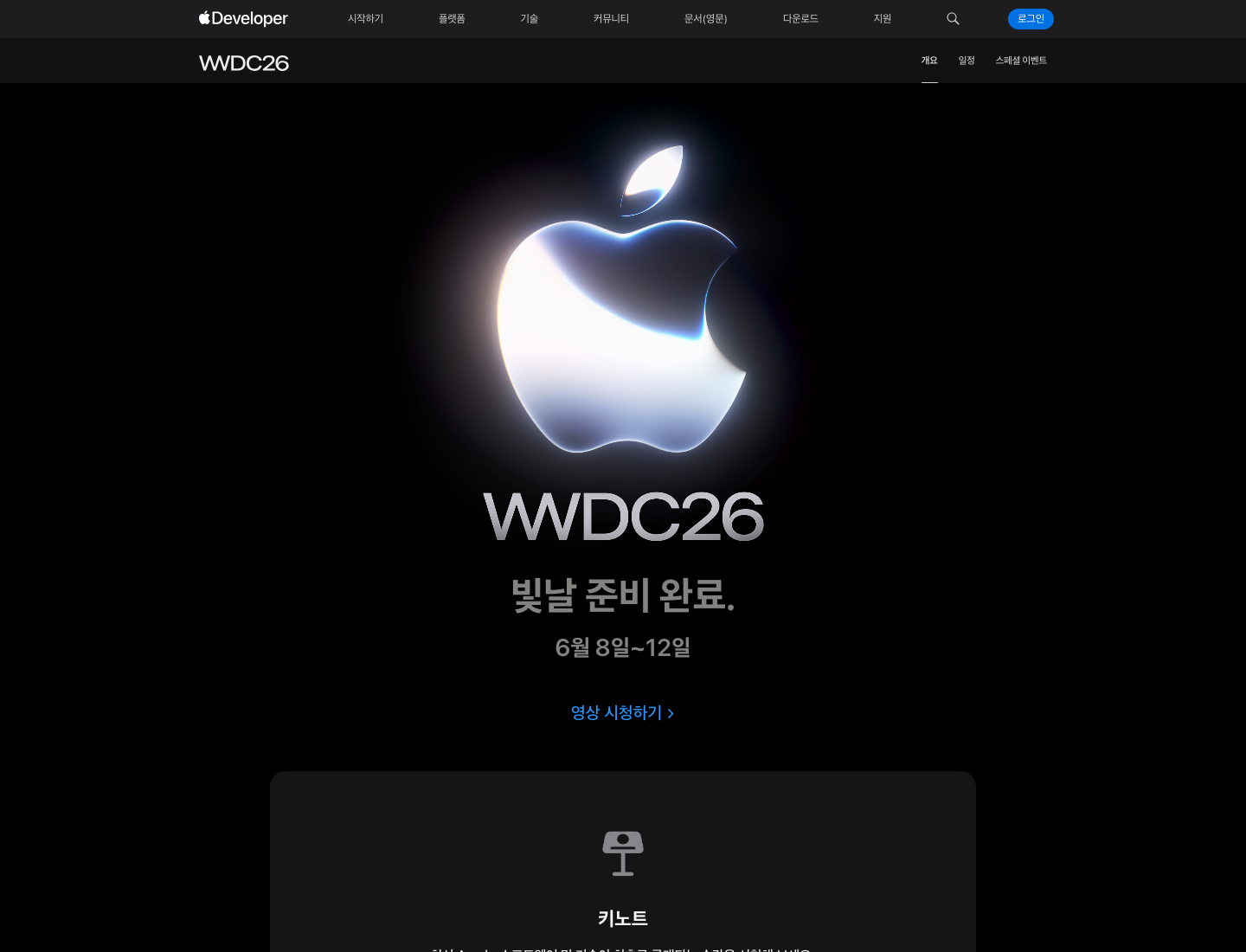
Source: screenshot from Apple Developer WWDC26
Could Siri Be the Main Event?
The biggest thing for me is Siri.
Siri has been the “maybe this time” feature for years. So I do not want to overhype it. Still, the latest reports are interesting.
MacRumors, summarizing Bloomberg-based information, points to a dedicated Siri app, Dynamic Island behavior, and a Search or Ask entry point. That sounds less like a simple voice assistant update and more like a system-wide place to search, ask, and trigger actions.

Source: ITWorld Korea - iOS 27 Siri feature roundup
If that direction is real, I want to check a few things first:
- Does Siri really get its own app-like surface?
- Does
Search or Askreplace or expand Spotlight? - How does it connect to Dynamic Island?
- Do App Intents and Shortcuts become more important?
- What happens with language and region support?
For an app developer, the useful question is not only whether Siri got smarter. It is whether app actions and app content can become easier to reach from Siri or search.
Then Comes Apple Intelligence
Apple Intelligence is the next obvious area.
Apple’s Newsroom post mentions AI advancements, software updates, and developer tools. What matters is not the phrase “more AI.” It is where the AI ends up.
I will be watching for:
- AI features in Photos and Camera
- Writing, summary, and search improvements that feel natural
- The split between on-device and cloud processing
- More model choices, if Apple opens that up
- Clear ways for users to review, edit, or cancel output
AI demos usually look good on stage. Real usage is where permissions, privacy, latency, and accuracy show up. So I care more about user control than raw automation.
Foldable Also Means iPad-Style UI
A foldable iPhone is not official.
I am not expecting WWDC to suddenly become a foldable iPhone launch event. But software hints are worth watching. Larger screens, split-screen behavior, landscape improvements, adaptive layout, those things can show up before the hardware does.
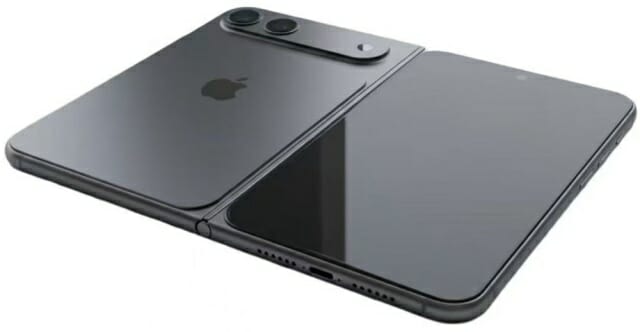
Source: ZDNet Korea - Foldable iPhone rumor roundup
If the device is book-style rather than flip-style, the software question changes. It becomes less about a new phone shape and more about an interface that sits somewhere between iPhone and iPad.
The important part is how much of the iPad UI model carries over. If an unfolded iPhone behaves like only a bigger iPhone screen, that is one thing. If it starts borrowing list-detail layouts, sidebars, multi-column navigation, or split-view patterns from iPad, that becomes much more interesting for app design.
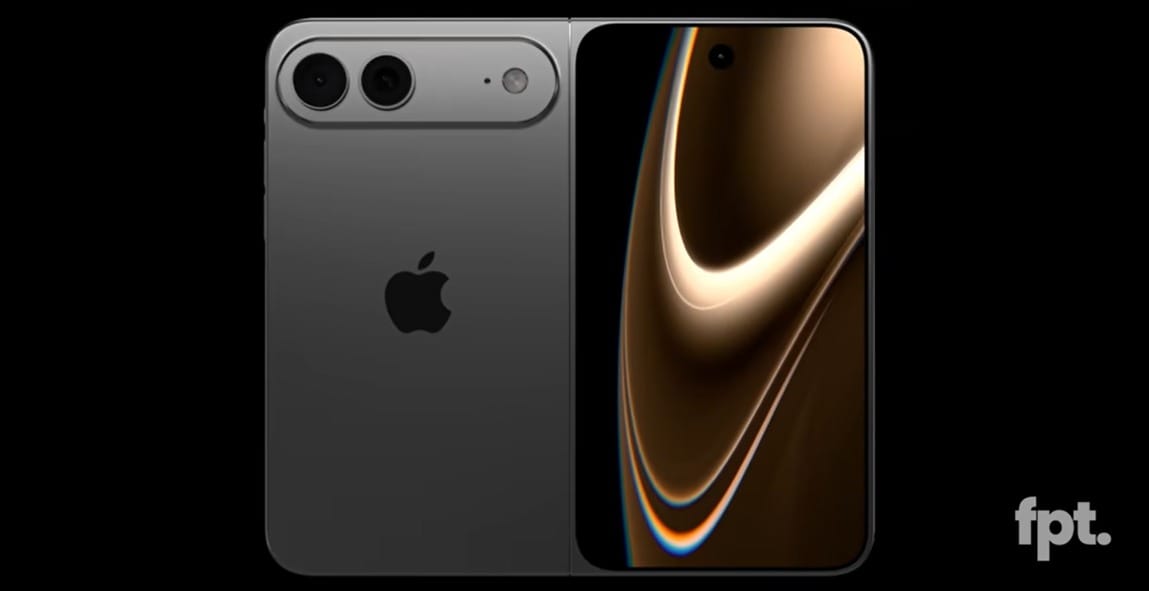
Source: News1 - Foldable iPhone render and size report
If the inner display really lands in the roughly 7-inch range, an iPhone app cannot stay designed only for a narrow phone canvas. Information density, navigation, and tap targets all start to matter differently.
What I am most curious about is not only screen size. It is usability.
When closed, it still has to feel like a good iPhone: checking notifications, replying to messages, paying, and doing quick searches should stay simple. When opened, though, it cannot be only a larger iPhone screen. There needs to be a reason to unfold it: list and detail side by side, writing while referencing something else, or viewing a chart and action panel at the same time.
The most important part is continuity. If I am reading something on the outer screen and open the device, does it keep the same position naturally? If I am typing a message and unfold it, does the input survive without friction? Does the app resize without feeling broken? That is the kind of detail users will feel immediately.
Another question is what happens to existing iPhone-only apps. If the unfolded screen behaves closer to an iPad-style UI, how will apps that do not support iPad layouts appear? Will they run as a centered iPhone-sized window with empty space around them? Will iOS generate a wider layout automatically? Or will Apple use some kind of compatibility mode until developers update their apps?
For solo developers, that may be the more practical question. Not every app already has a good iPad layout. If Apple provides a natural default behavior for iPhone-only apps, the transition becomes much easier. If developers have to prepare adaptive layouts manually, the foldable story immediately becomes a real maintenance task.
Apple could follow the familiar Galaxy Fold-style formula: phone when closed, small tablet when opened. That is a safe direction because the pattern already makes sense. But I am also curious whether Apple will push a different paradigm by connecting Siri, AI, App Intents, and iPad-style UI. If it can make the foldable feel like a new way to use iPhone rather than just another screen size, that would be the more interesting shock to the market.
Even if a foldable iPhone does not arrive right away, this work connects to iPad support and better large-screen UI. For me, the practical question is simple:
"Can my UI expand naturally into an iPad-like layout?"
If SwiftUI or iOS gets clearer large-screen behavior, that is useful even before any new device ships.
iOS 27 and Xcode Matter Too
iOS 27 matters because it is where all of this has to land. Siri can look great on stage, but device support, language support, region support, and API behavior decide whether it actually matters.

Source: Quasarzone - iOS 27 mobile news
Xcode is also worth watching, and this part deserves more than one line.

Apple already announced agentic coding support in Xcode 26.3, including Claude Agent, OpenAI Codex, and MCP server support. This is not just autocomplete. It means agents are moving into the IDE itself.
What already matters in Xcode 26.3:
- Claude Agent and Codex can plug into Xcode directly
- MCP gives other compatible tools a path into Xcode
- Project files, docs, build output, and test flow can become useful context
- The AI workflow starts moving from a separate chat window into the actual development loop
For WWDC26, I am more interested in the next step:
- Can an agent inspect Xcode Previews and fix UI issues?
- Can it follow build and test failures far enough to make useful changes?
- Can it use Apple docs for SwiftUI, App Intents, StoreKit, and platform changes?
- Can it help with project settings, signing, or capabilities without making a mess?
- Does Apple define clear permission and approval boundaries?
- Do local and cloud models get different roles?
The Preview and build-log parts are what I want to see most. iOS development is not done when the code looks right. The UI has to look right, the build has to pass, and the app has to behave on a real device.
If Xcode can make the loop feel like “edit → preview → build → fix” with an agent involved, that is a meaningful shift. If it is only another chat box, I will be less excited.
WWDC26 Schedule
The schedule is simple:
- WWDC26: June 8-12, 2026
- Keynote: June 8, 10 a.m. PT
- Platforms State of the Union: June 8, 1 p.m. PT
- Sessions: 100+ videos
- Where to watch: Apple Developer app and website
What I’ll Check After the Keynote
After the keynote, I will probably check my notes in this order:
1. How much Siri actually changed 2. Where Apple Intelligence shows up 3. Whether iOS hints at larger or foldable screens 4. What Xcode and developer tools gained 5. What language, region, and device limits apply
Some of this will be right, some of it will be wrong. That is fine. A pre-keynote post is not a prophecy; it is just a way to watch the keynote with a clearer head.
In Short
The three things I am watching first:
- Siri: does it become a real app/search/action entry point?
- AI: does it fit into real app flows?
- Foldable: does iOS start preparing for wider iPhone layouts?
If Xcode changes connect to that as well, this could be a pretty interesting WWDC for solo app developers.
The real answers come from the June 8 keynote, then the docs, sessions, and beta builds.
References:
Comments
0